
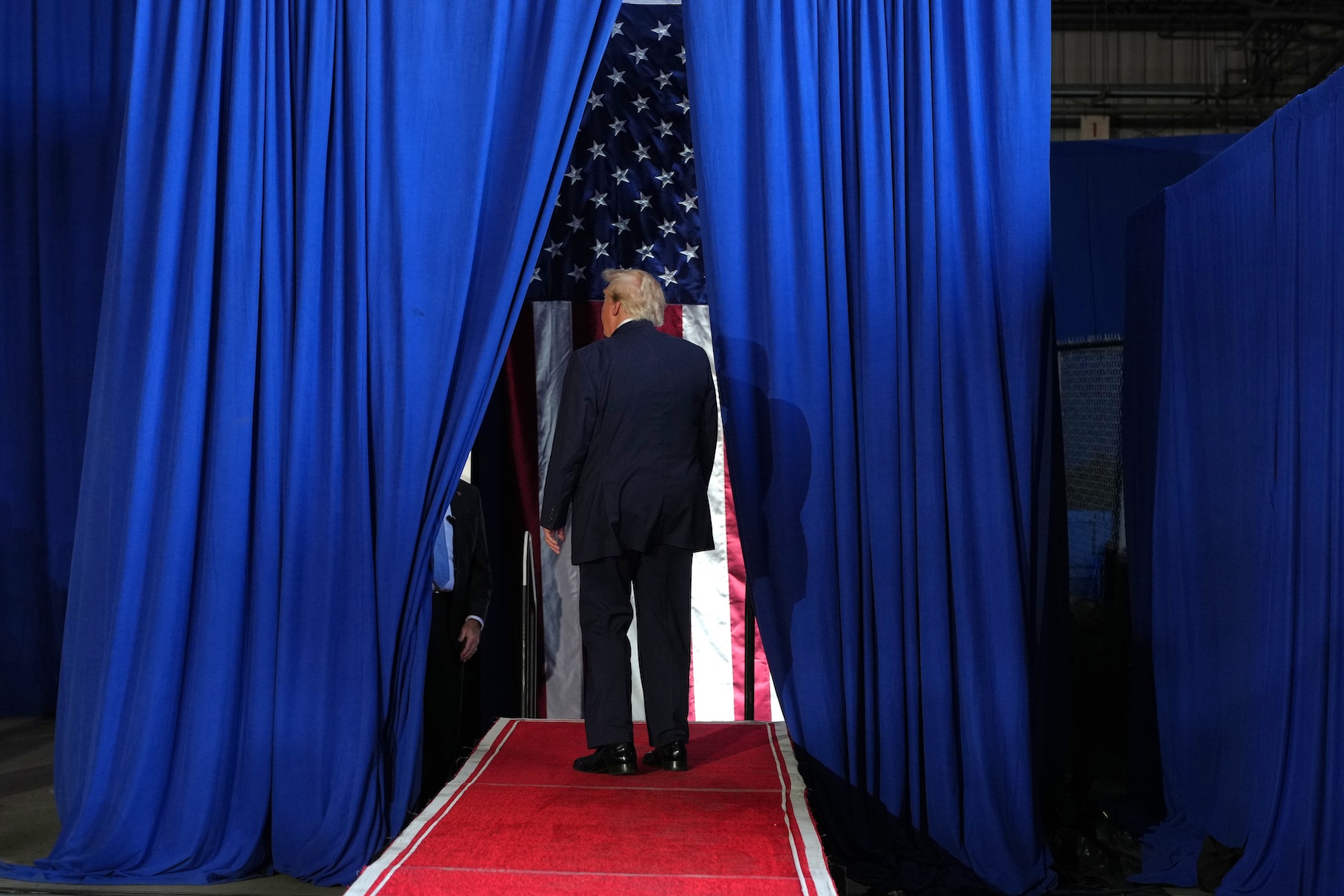
The nation’s major political parties are at a crossroads.
A decade after he began to remake the Republican Party in his image, President Donald Trump is facing the prospect of a voter rebellion Tuesday that could force conservatives to rethink their undying allegiance to the 80-year-old lame-duck leader and his “Make America Great Again” movement. Already, some Republican candidates have begun to distance themselves from him.
And Democrats, who remain unpopular despite midterm momentum, are speeding toward a tug-of-war between establishment leaders and emboldened progressives demanding nothing less than transformative change.
Whether either party wins or loses Tuesday, the end of the 2026 midterms marks the beginning of a high-stakes fight over the country’s political future in the twilight of the Trump era — a fight that will swiftly surge to the forefront of American politics as new members of Congress descend upon Washington and the 2028 presidential contest takes off.
“When President Trump leaves office, it’s going to create a tremendous vacuum. And I ask the question, where does the country go next?” said former Republican Sen. John E. Sununu, who is running for the New Hampshire Senate seat he lost in 2008.
More than any policy or principle, the most powerful unifying force in the modern-day Republican Party has become Trump himself.
And so, as the party looks to the end of the Trump era, major questions loom over who or what will guide it. Trump long ago smashed Ronald Reagan’s three-legged stool of conservatism that defined the GOP for generations: fiscal conservatism favoring small government and free trade, conservative social values and a muscular foreign policy.
What remains today is a fluid populism that changes with the whims of the outgoing president.
The brash businessman helped move the Republican Party away from the country club and toward a much broader coalition of working-class voters, including a growing slice of the traditional Democratic base, including Hispanics, African Americans and young people.
Republican strategist David Urban said he’s closely watching whether the Trump coalition holds up Tuesday.
“When we see that, that’ll tell you a lot about the future,” Urban said. “Look, if all those folks stay home — they’re disaffected because of the economy, or the war, or pick your exit polling issue — that then leaves a lot of questions of who’s going to be the next standard-bearer for the party.”
Most of the Republican Party’s 2028 buzz has focused on Vice President JD Vance. The 42-year-old former Ohio senator went from a Trump critic to a Trump acolyte, and he could face the usual challenges of establishing an independent political identity while serving in the nation’s number two role.
Should Republicans have a bad night Tuesday, Vance’s presidential stock could take a hit. Another popular 2028 prospect, Secretary of State Marco Rubio, could face a similar challenge.
But that could open the door for Texas Sen. Ted Cruz, Florida Gov. Ron DeSantis, or perhaps even a vocal Trump critic like former New Jersey Gov. Chris Christie, who is 64 years old and weighing a comeback.


